
 Čeština
 Français
 Deutsch
 English GB
 Dansk
Dansk
 ελληνικά
 Türkçe
 Svenska
 Română


Inkjet allows us to share a larger variety of prints
We hope to give access to high quality reproductions of prints that haven't been ever been reprinted or that haven't been printed in well over 100 years. The cost to produce wood blocks is simply too high to create prints that will only sell a couple each year. Printing on an inkjet printer also allows us to sell these at a much lower cost without the need to sell hundreds of copies. You can obtain beautiful works of art at a fraction of the cost.
In the future, we will sponsor new artists in Japan in their ventures of making genuine woodblock prints, but we're just starting this business. We don't want to replace woodblock printing, but we want to help spread the word and artistry ukiyo-e prints across the world. In doing so, we hope that more people will become interested in purchasing genuine, handmade woodblock prints. We also hope to work with artists in Japan to sell their prints across the world after we get this business up and running.
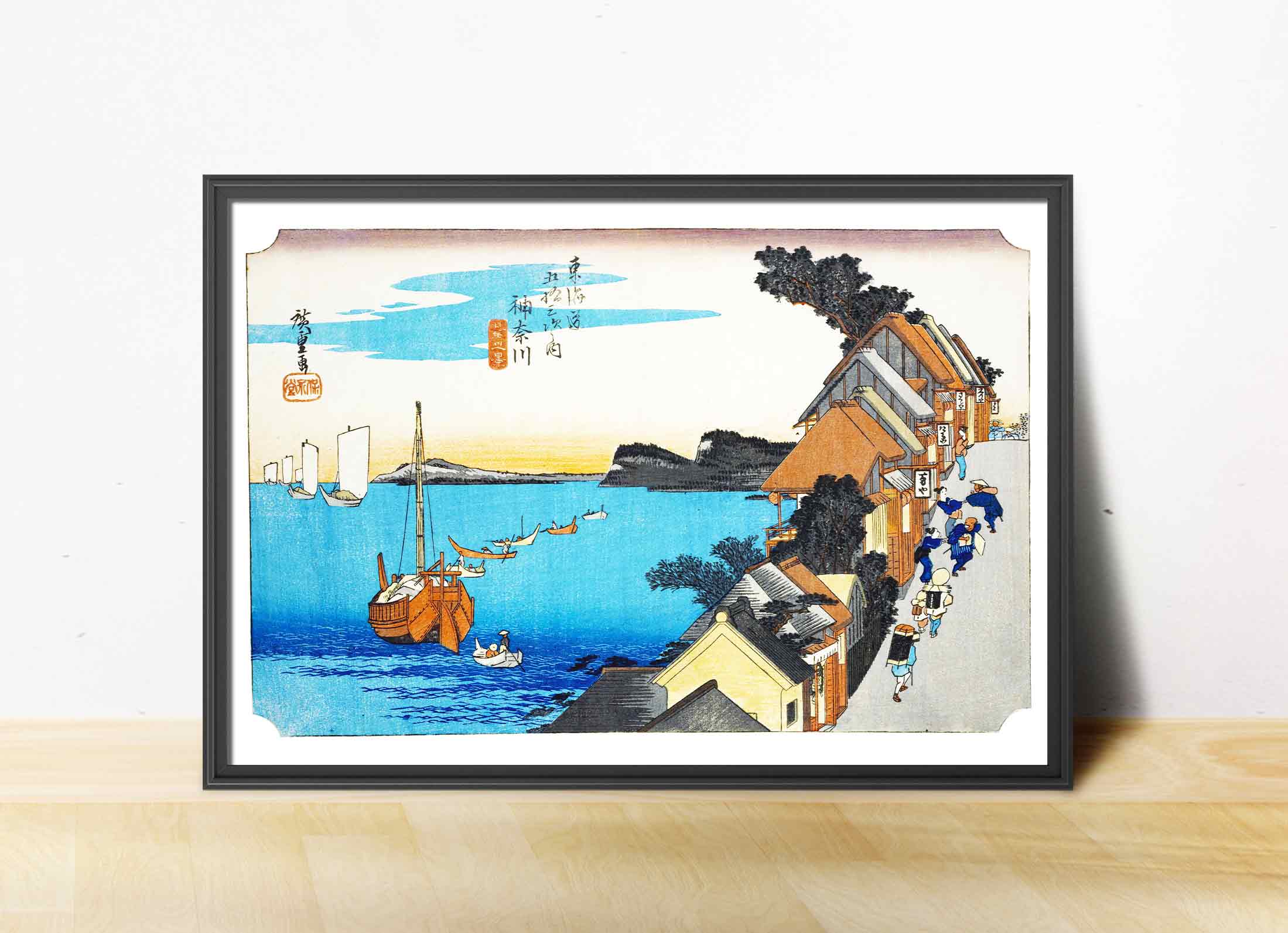
What is the quality of these prints?
The color gradients and print clarity will make you think that you're looking at genuine woodblock prints. Prosumer and consumer printers simply can't match the level of quality and dot precision.
Our prints also use archival papers and archival inks, which significantly increase the durability of these in almost all forms of use. If stored and handled properly, you can expect these prints to last over 100 years without the paper yellowing or the inks fading.
Home and business printers usually use dye-based inks, which generally fade within a few years even under the best conditions. Our printers use pigment-based inks, which maintain their colors simply due to natural properties. Pigments are why paintings can last hundreds of years with little or no fading. Pigment inks, though, are somewhat subject to rubbing. Some surface-level pigment may rub off onto your hands when handling, but this would usually only happen if you're rubbing the paper hard.
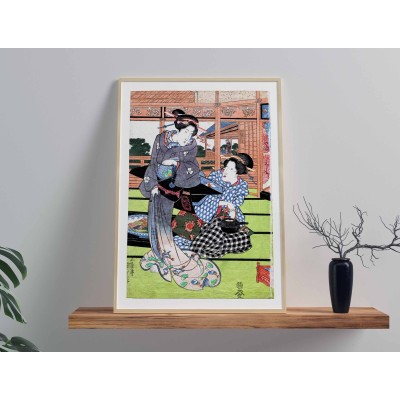
This is an archival-quality giclee reproduction print of A View of the Large New Room at Sakurai (Print 2) by Kunisada Utagawa (歌川国貞), originally printed in the early to mid 1830s.
Your location is used to determine taxes, which are included in the price when applicable. The amount of tax may change after inputting your address.
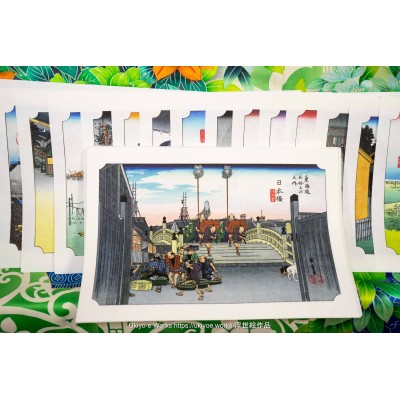
This collection includes a total of 55 reproduction prints, printed using a top-of-the-line inkjet printer with archival-quality ink on aiban-sized (13.4" x 9", 34cm x 23cm) Awagami Kozo Thick White washi. If handled and stored correctly, these prints can last for 100 or more years without fading or aging.
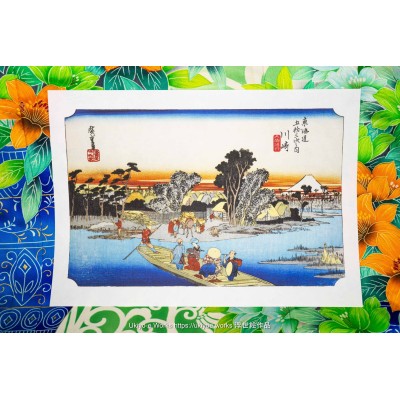
This is a reproduction print of Kawasaki Station (川崎宿), the 2nd station along the Tokaido, made by Hiroshige Utagawa in 1833-1834. It appears in Hiroshige's Fifty-three Stations of the Tokaido (東海道五十三次) collection.
Your location is used to determine taxes, which are included in the price when applicable. The amount of tax may change after inputting your address.
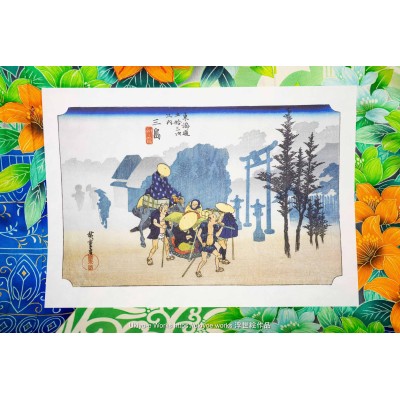
This is a reproduction print of Mishima Station (三島宿), the 11th station along the Tokaido, made by Hiroshige Utagawa in 1833-1834. It appears in Hiroshige's Fifty-three Stations of the Tokaido (東海道五十三次) collection.
Your location is used to determine taxes, which are included in the price when applicable. The amount of tax may change after inputting your address.
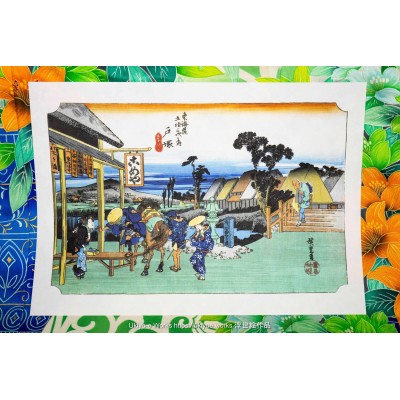
This is a reproduction print of Totsuka Station (戸塚宿), the 5th station along the Tokaido, made by Hiroshige Utagawa in 1833-1834. It appears in Hiroshige's Fifty-three Stations of the Tokaido (東海道五十三次) collection.
Your location is used to determine taxes, which are included in the price when applicable. The amount of tax may change after inputting your address.
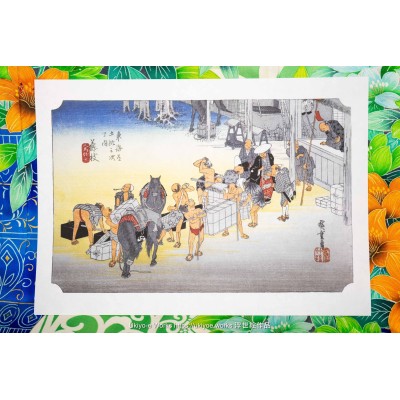
This is a reproduction print of Fujieda Station (藤枝宿), the 22nd station along the Tokaido, made by Hiroshige Utagawa in 1833-1834. It appears in Hiroshige's Fifty-three Stations of the Tokaido (東海道五十三次) collection.
Your location is used to determine taxes, which are included in the price when applicable. The amount of tax may change after inputting your address.
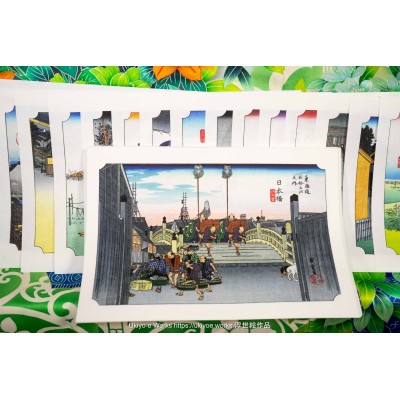
This collection includes a total of 55 reproduction prints, printed using a top-of-the-line inkjet printer with archival-quality ink on A3+-sized (13" x 19") Awagami Kozo Thick White washi. If handled and stored correctly, these prints can last for 100 or more years without fading or aging.
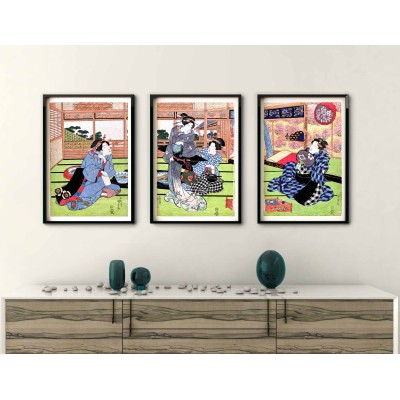
This is an archival-quality giclee reproduction print set of A View of the Large New Room at Sakurai by Kunisada Utagawa (歌川国貞), originally printed in the early to mid 1830s.
Your location is used to determine taxes, which are included in the price when applicable. The amount of tax may change after inputting your address.